
Standard Game · Strategy
Tobruk
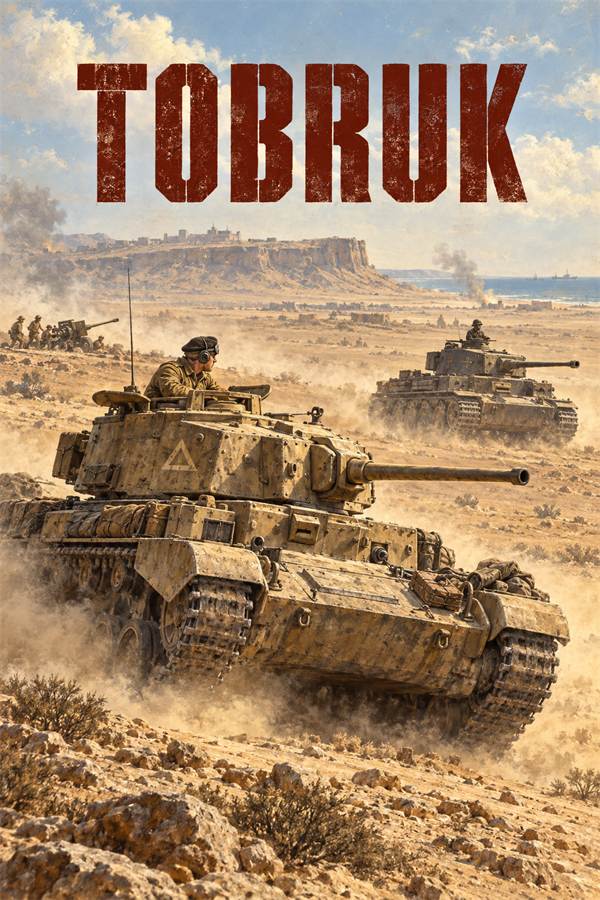
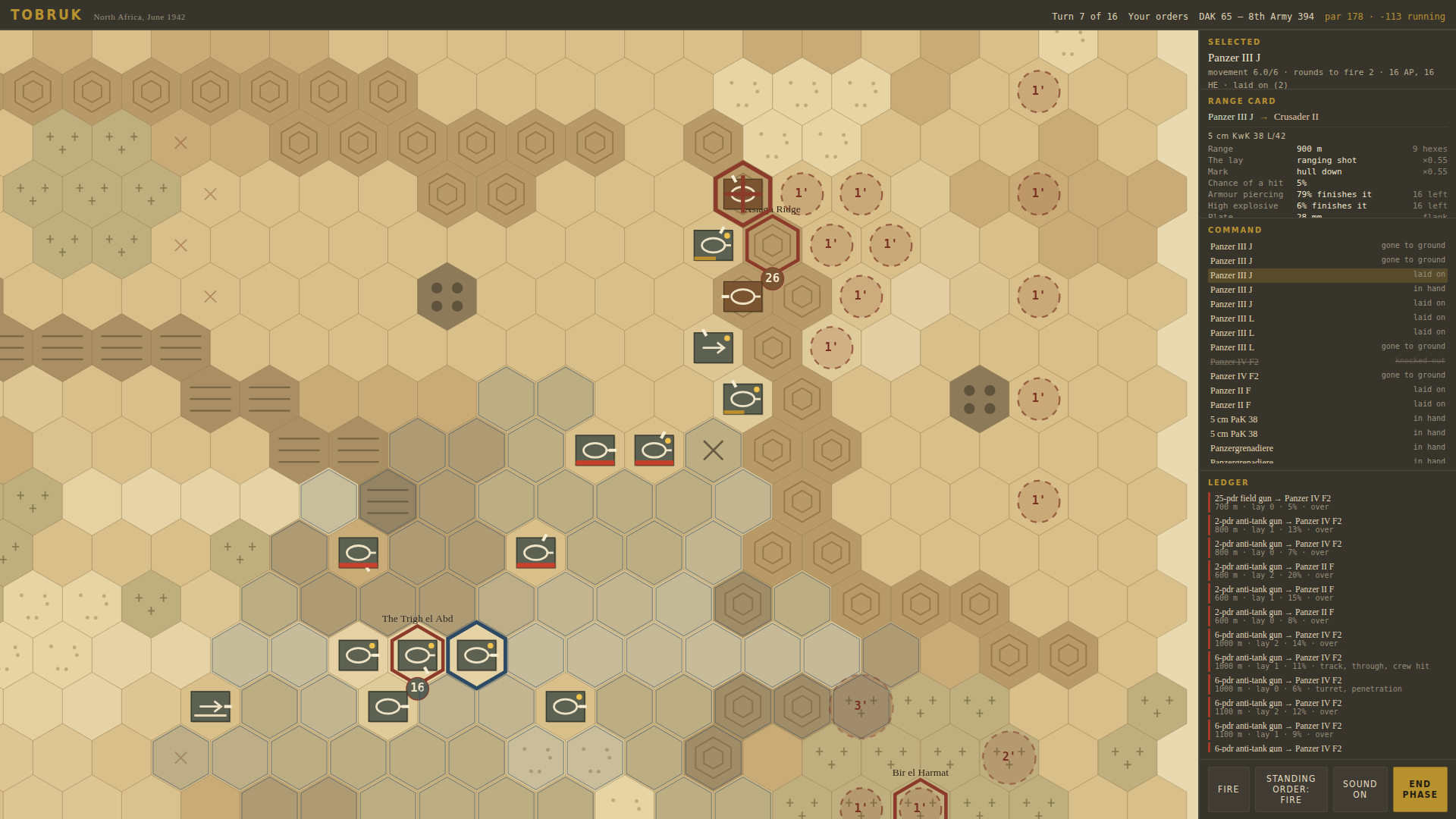
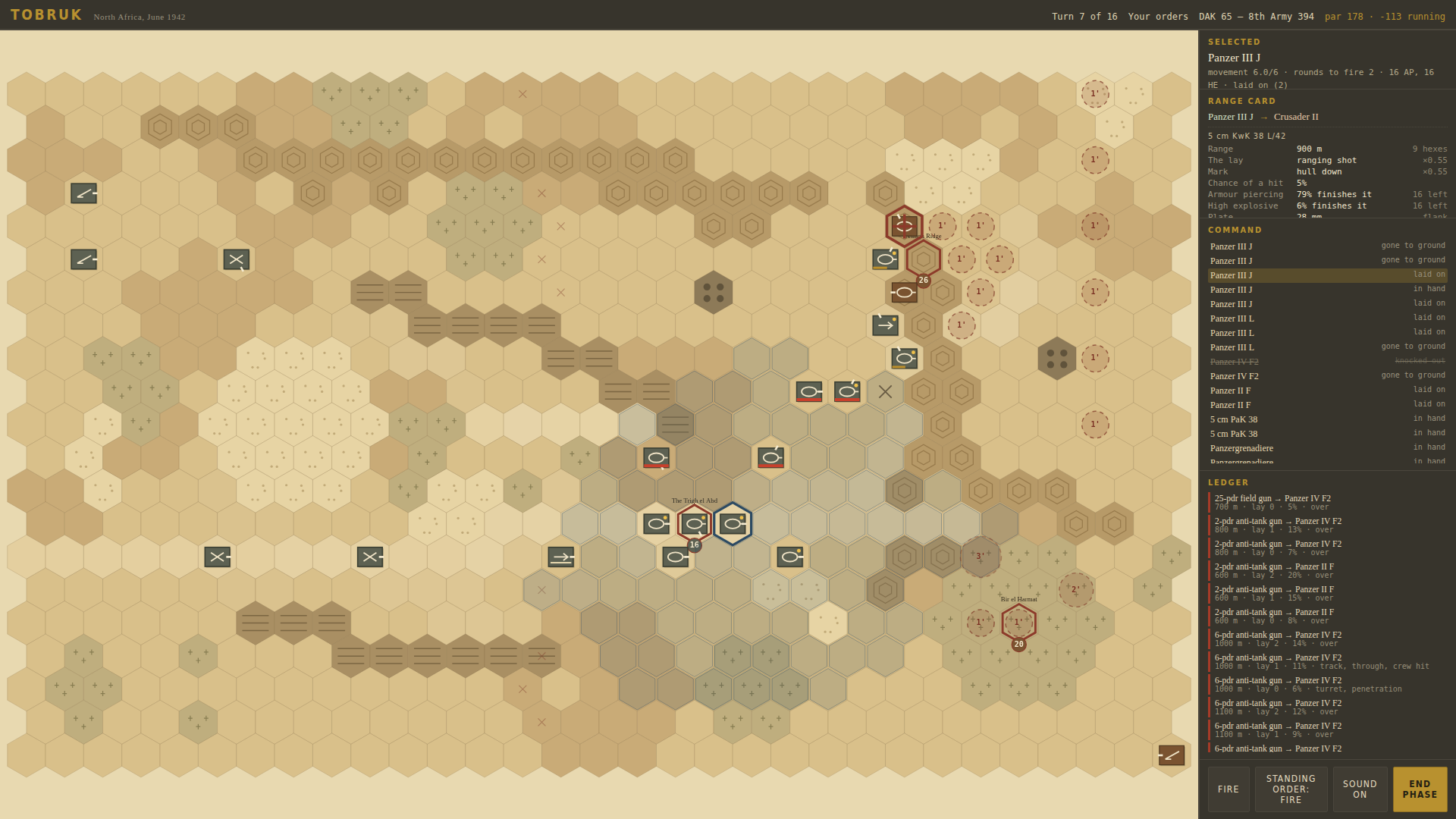
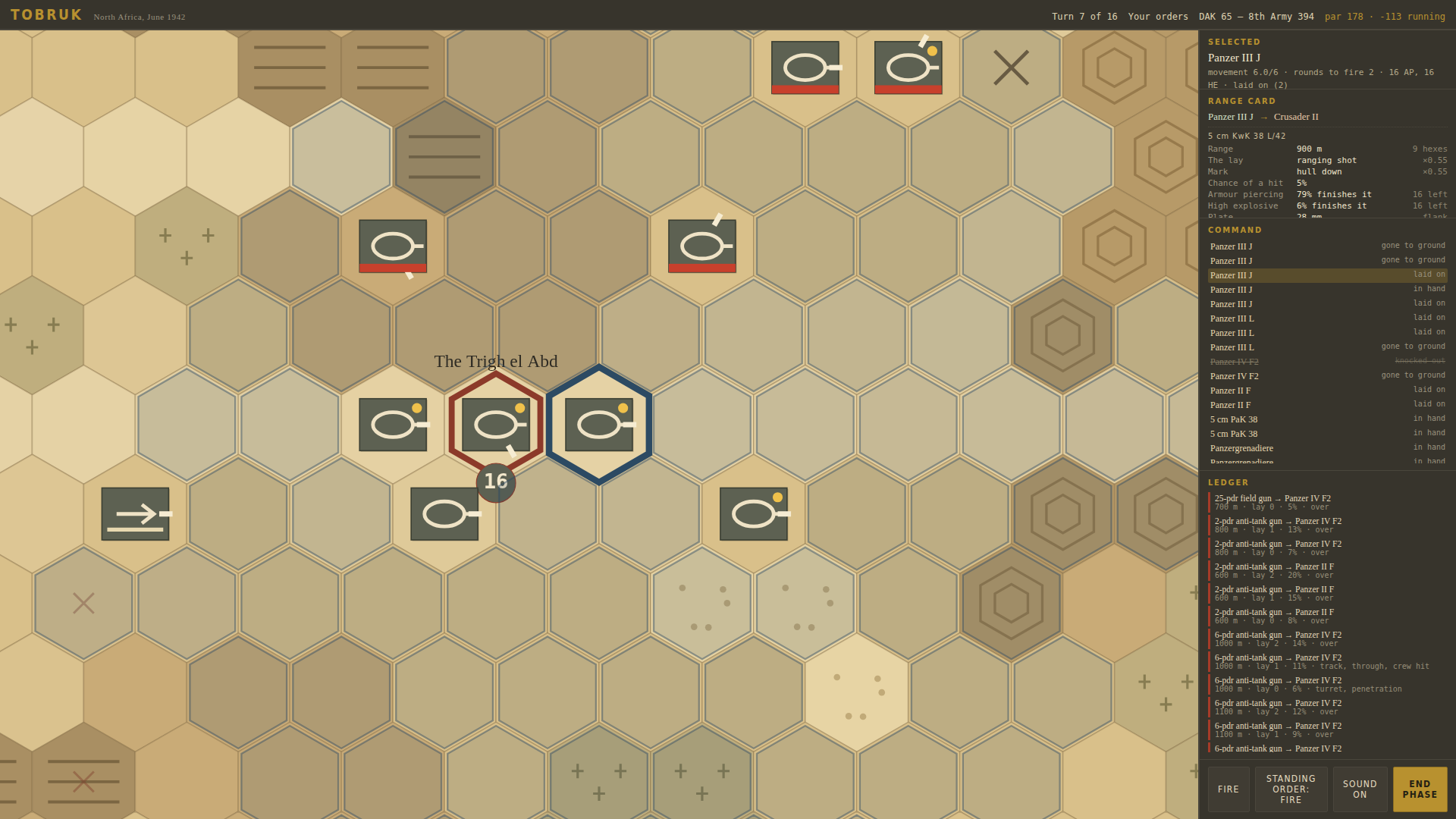
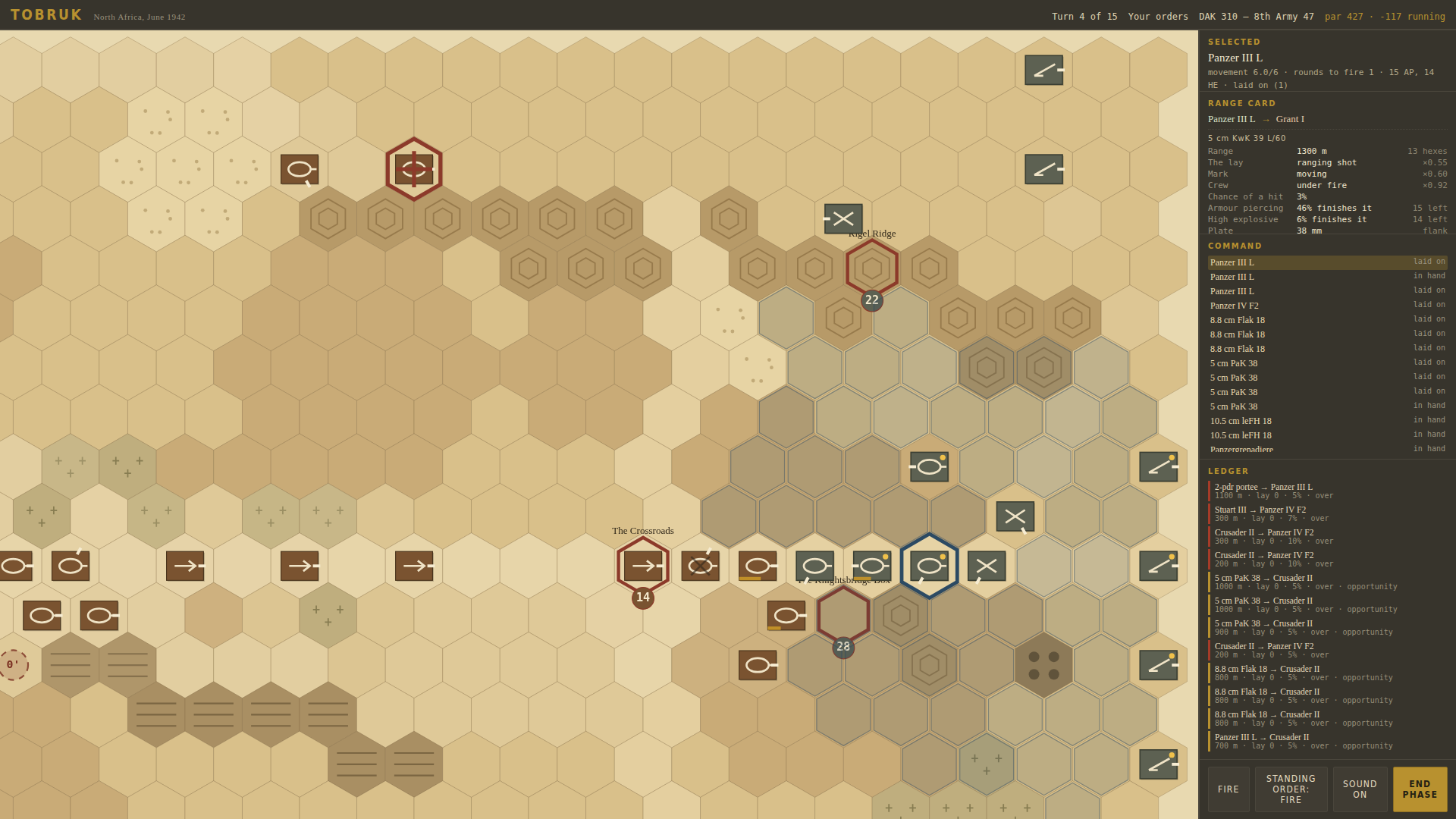
Tobruk is a tactical armoured wargame set around the Gazala battles and the fall of Tobruk in June 1942. One hex is a hundred metres; one turn is one minute; one counter is a single vehicle, a gun and its detachment, or a section of infantry. The game turns on one rule. A shot at a mark you have already fired at, from a position you have not left, is a wholly different proposition from the first round out of the barrel -- and a MISS still teaches the gunner where the fall of shot went. Firing is therefore an investment, and moving spends it. Stand and range in, or move and live: that is the whole of desert tank fighting, and it comes out of that single rule. Around it sits everything the ground and the machines impose. Rounds strike a particular place on a particular face and have to beat the plate they find there. A column crossing open going throws up dust, and then hides in it. Crests let a hull get behind the ground -- but a Grant that goes hull down loses the sponson seventy-five that is its main armament, because the gun cannot be brought to bear without showing the hull. Anti-tank guns are small, low and hard to see until they fire, and the only quick answer to a gun line is to drive onto it. Ready ammunition runs out. The ground is not generated. Three boards are printed and fixed, laid out from the real features of the fighting -- the Sidra and Aslagh ridges and the Trigh el Abd in the Cauldron, Rigel Ridge and the crossroads at Knightsbridge, the escarpment and the perimeter ditch at El Adem. The Cauldron is the same Cauldron every time you set it up, which is the point of a board: you learn the ground. Three actions are included: The Cauldron (1 June 1942, 06:40), Knightsbridge (12 June 1942, 11:15), El Adem Ridge (20 June 1942, 05:20).
About this game
Tobruk is a tactical armoured wargame set around the Gazala battles and the fall of Tobruk in June 1942. One hex is a hundred metres; one turn is one minute; one counter is a single vehicle, a gun and its detachment, or a section of infantry. The game turns on one rule. A shot at a mark you have already fired at, from a position you have not left, is a wholly different proposition from the first round out of the barrel -- and a MISS still teaches the gunner where the fall of shot went. Firing is therefore an investment, and moving spends it. Stand and range in, or move and live: that is the whole of desert tank fighting, and it comes out of that single rule. Around it sits everything the ground and the machines impose. Rounds strike a particular place on a particular face and have to beat the plate they find there. A column crossing open going throws up dust, and then hides in it. Crests let a hull get behind the ground -- but a Grant that goes hull down loses the sponson seventy-five that is its main armament, because the gun cannot be brought to bear without showing the hull. Anti-tank guns are small, low and hard to see until they fire, and the only quick answer to a gun line is to drive onto it. Ready ammunition runs out. The ground is not generated. Three boards are printed and fixed, laid out from the real features of the fighting -- the Sidra and Aslagh ridges and the Trigh el Abd in the Cauldron, Rigel Ridge and the crossroads at Knightsbridge, the escarpment and the perimeter ditch at El Adem. The Cauldron is the same Cauldron every time you set it up, which is the point of a board: you learn the ground. Three actions are included: The Cauldron (1 June 1942, 06:40), Knightsbridge (12 June 1942, 11:15), El Adem Ridge (20 June 1942, 05:20).
Screenshots
Community
Discuss the game, report problems, or suggest improvements.
No comments, bug reports, or change requests have been posted yet.