
Standard Game · Strategy
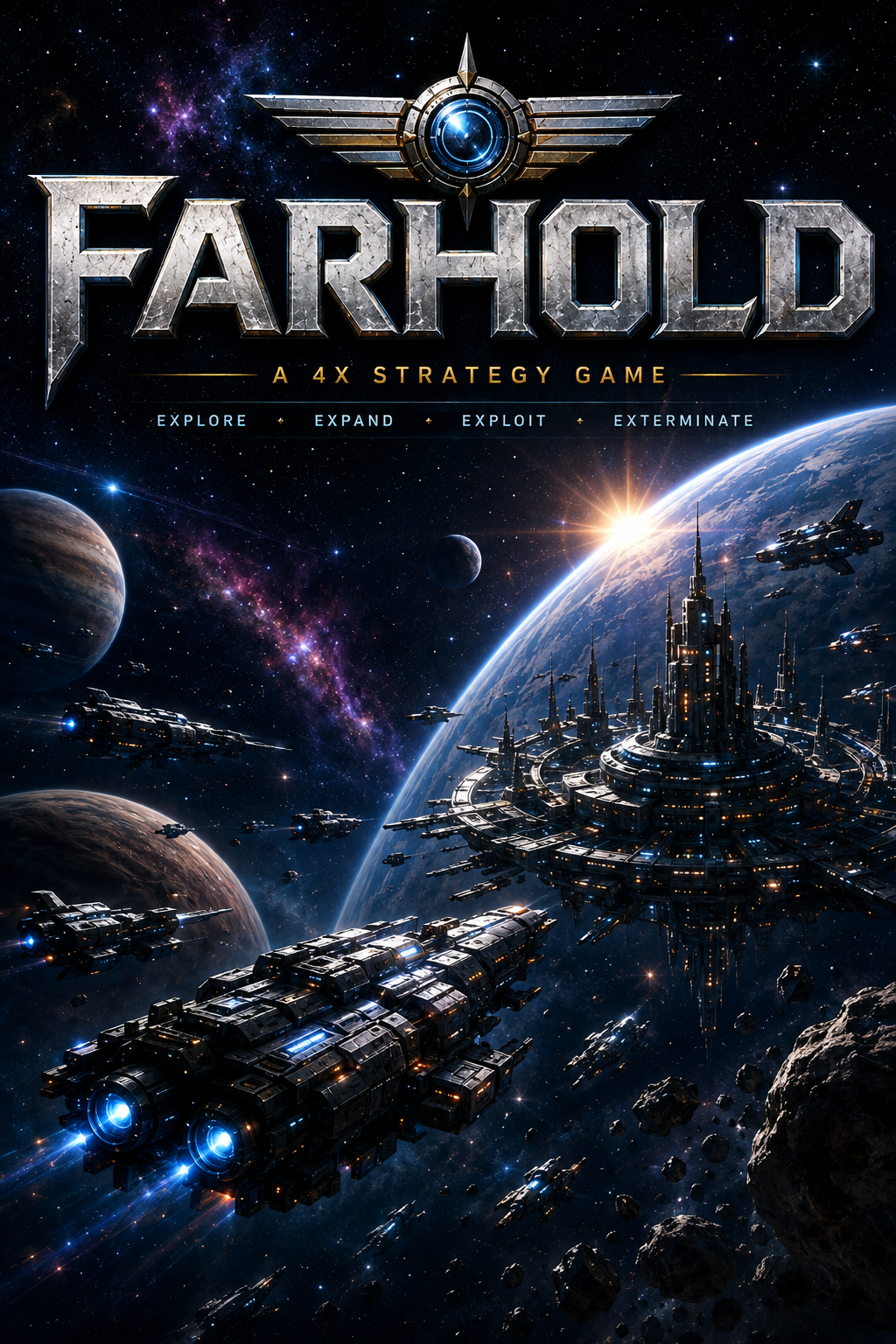
Farhold
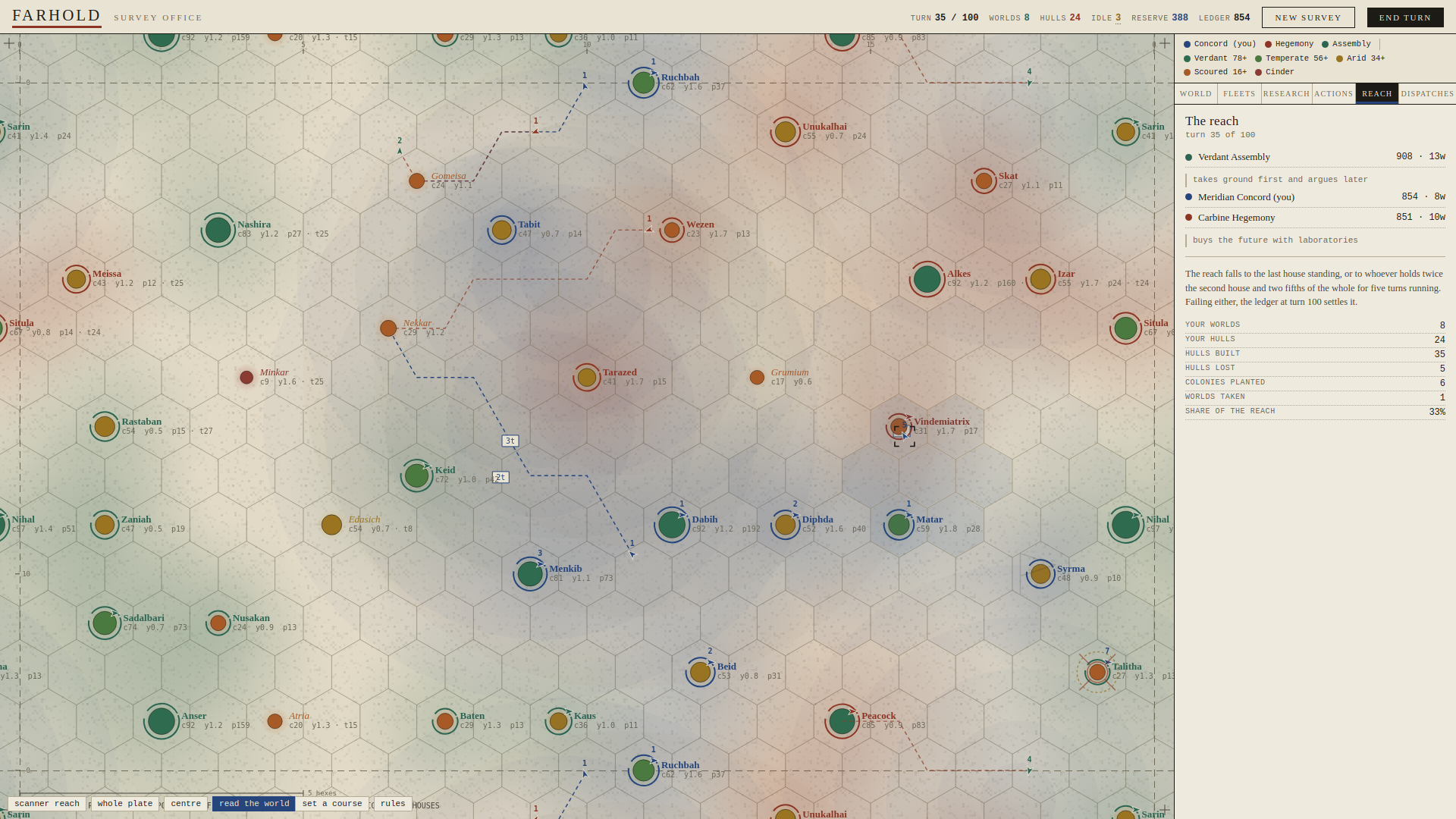
Farhold — an original game of star empires, played on a photographic survey
plate ruled in hexes that wraps in both directions.
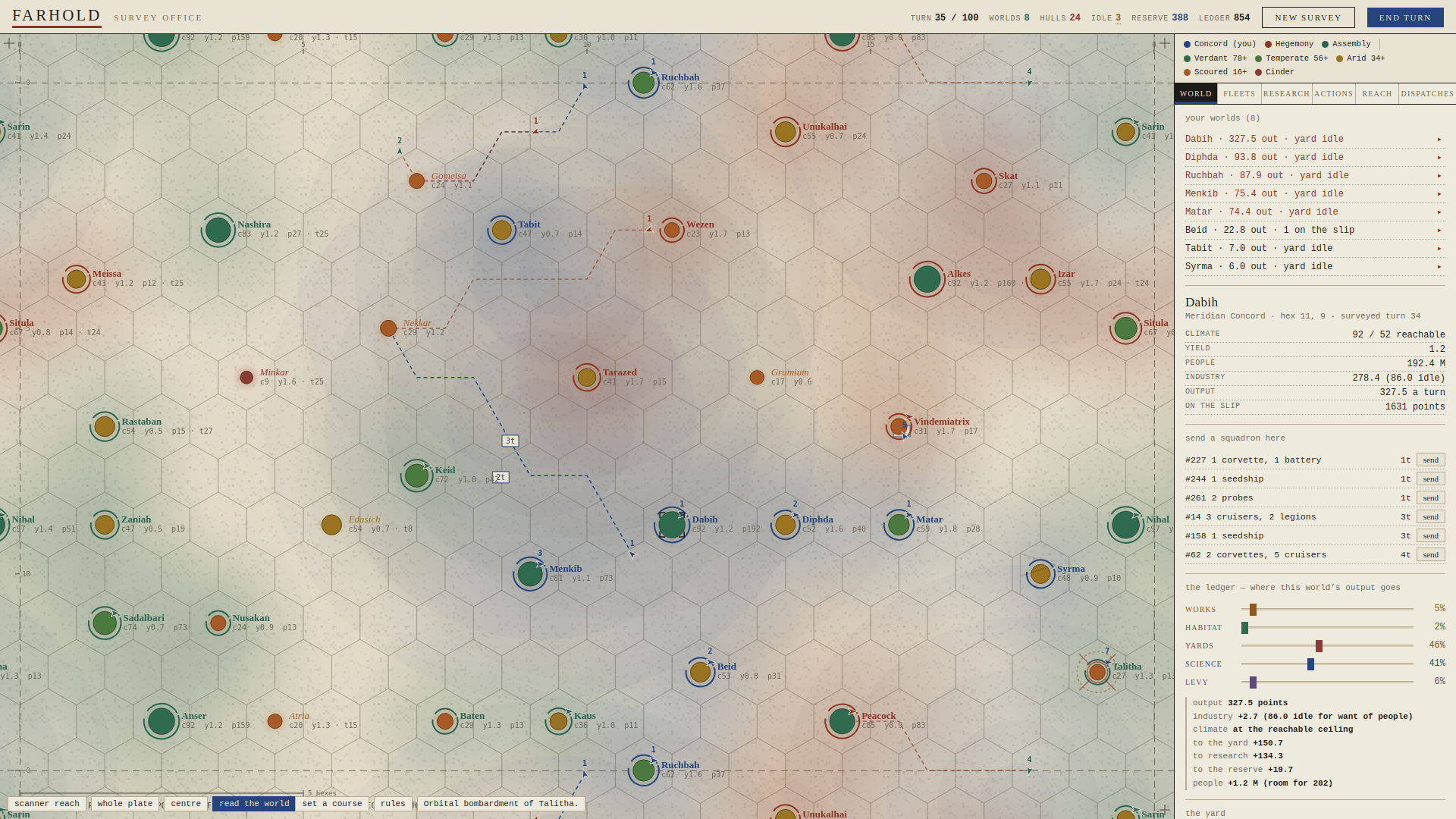
One sun is yours. Every other light in the reach is a point on the plate: you
know where it is, not what stands under it. Send a probe, or push your
scanners further, and the annotation appears beside it — climate, yield, and
whoever is already there. Distance is counted in hexes and nothing else: a
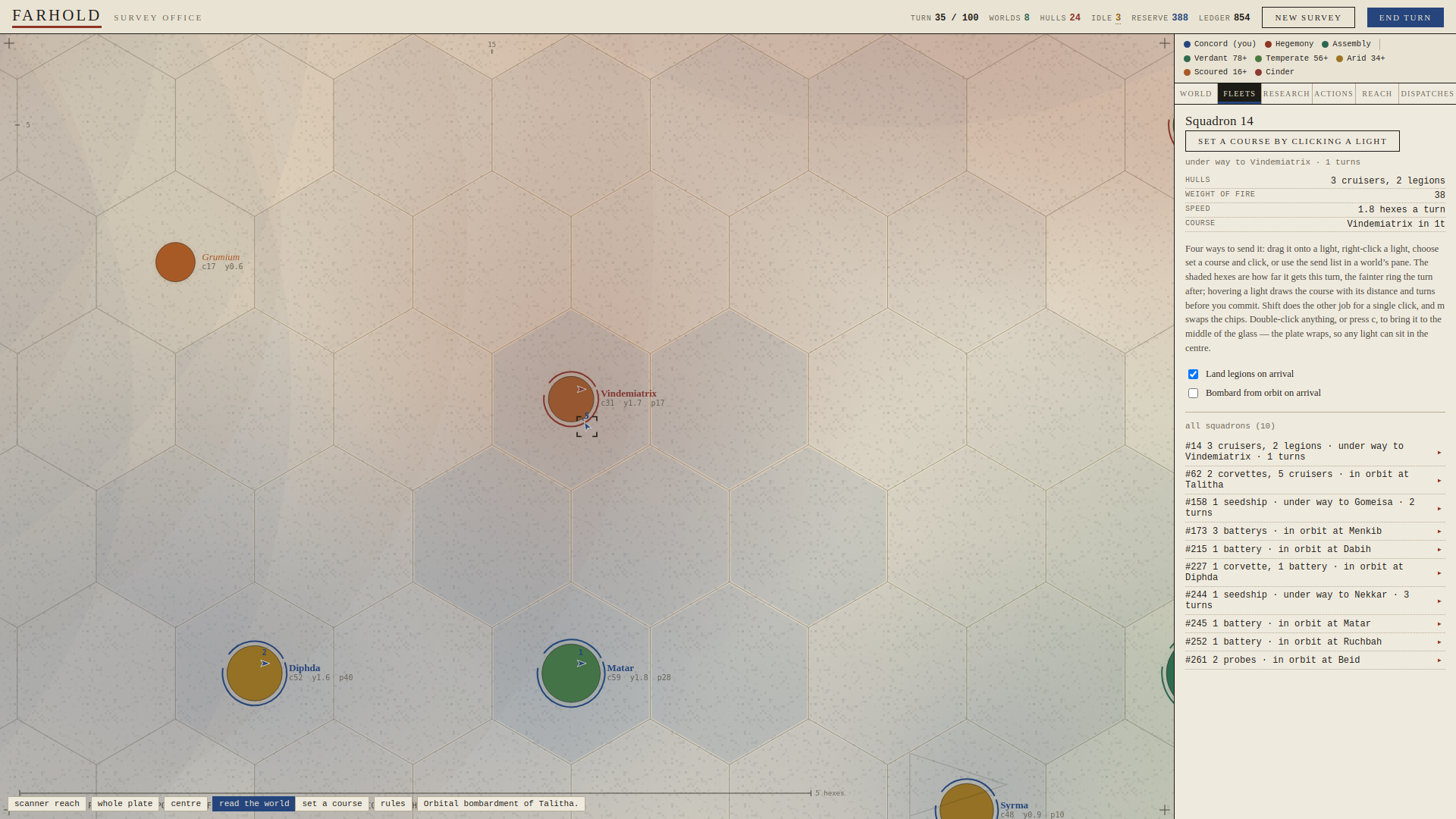
drive rating is hexes a turn, a scanner mark is hexes read clear, and a course
is a run of hexes you can see before you commit to it. The plate wraps top to
bottom and side to side, so there is no back door and no safe corner: every
house is somebody's neighbour in every direction. Rule the plate to order if
the presets do not suit. Every light is printed in the colour of its class, so
the plate says at a glance where life will take, and resting the pointer on a
squadron reads out what is aboard it.
Each world you hold makes one stream of output, and the whole game is the
argument over where it goes: into works, into the climate, into the yards,
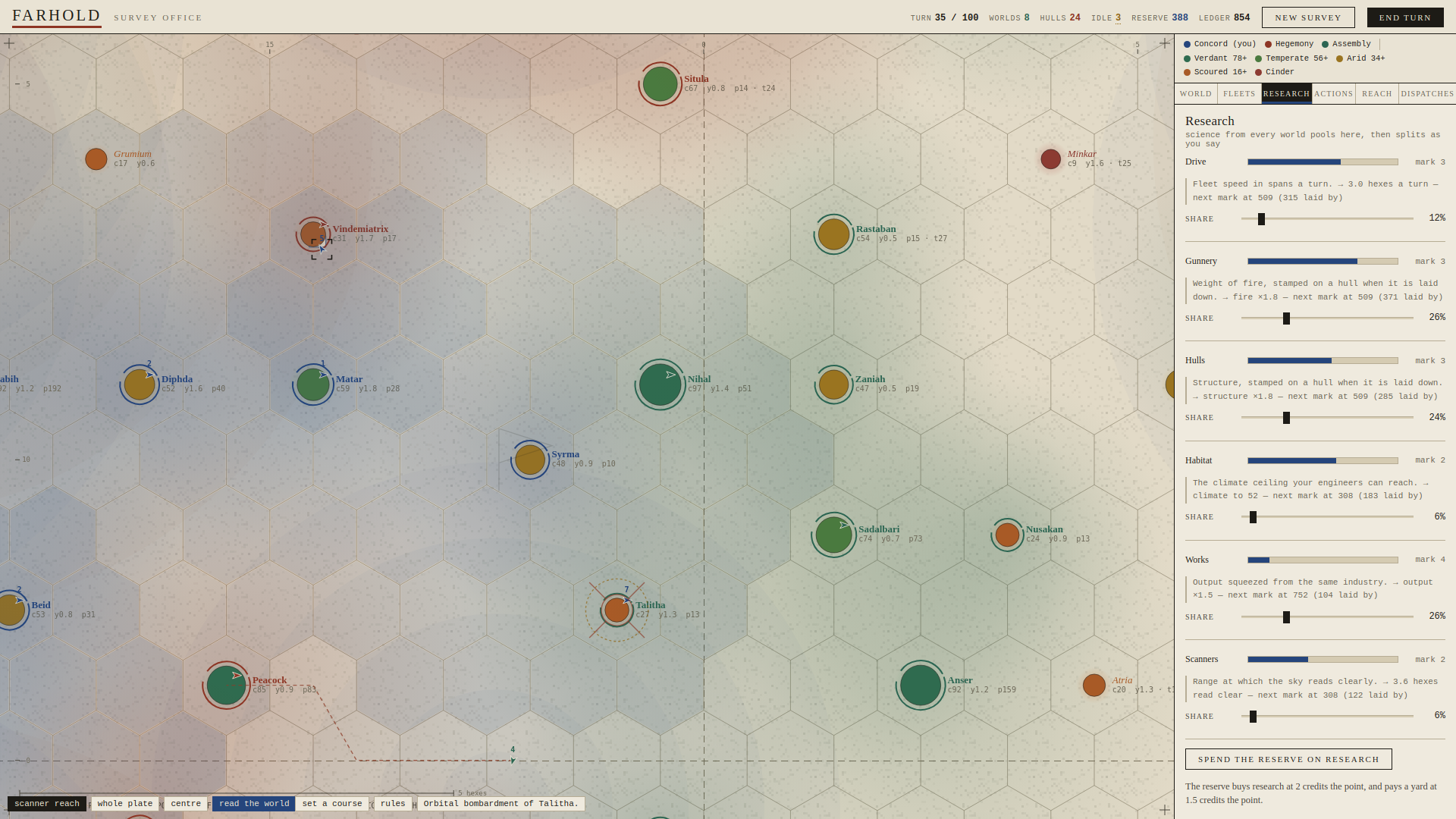
into the laboratories, or into the reserve. Research runs in six branches, and
a hull carries the gunnery and structure marks it was laid down with for the
rest of its life, so a fleet built cheap and early is still cheap and early
ten turns later.
Two to four houses begin the same way at opposite ends of the reach, and none
of them intend to share it. The reach falls to the last house standing, to
whoever holds twice the second house and 38% of the whole for 4 turns running,
or to the ledger at the last turn.
Players: 1 (against 1 to 3 machine houses) Play length: 25 to 90 minutes, set
by the survey length you choose (60 / 100 / 150 turns) Genre: 4X strategy,
empire building, turn-based Controls: pointer or touch, with keyboard panning,
zoom and end-of-turn
About this game
Farhold — an original game of star empires, played on a photographic survey
plate ruled in hexes that wraps in both directions.
One sun is yours. Every other light in the reach is a point on the plate: you
know where it is, not what stands under it. Send a probe, or push your
scanners further, and the annotation appears beside it — climate, yield, and
whoever is already there. Distance is counted in hexes and nothing else: a
drive rating is hexes a turn, a scanner mark is hexes read clear, and a course
is a run of hexes you can see before you commit to it. The plate wraps top to
bottom and side to side, so there is no back door and no safe corner: every
house is somebody's neighbour in every direction. Rule the plate to order if
the presets do not suit. Every light is printed in the colour of its class, so
the plate says at a glance where life will take, and resting the pointer on a
squadron reads out what is aboard it.
Each world you hold makes one stream of output, and the whole game is the
argument over where it goes: into works, into the climate, into the yards,
into the laboratories, or into the reserve. Research runs in six branches, and
a hull carries the gunnery and structure marks it was laid down with for the
rest of its life, so a fleet built cheap and early is still cheap and early
ten turns later.
Two to four houses begin the same way at opposite ends of the reach, and none
of them intend to share it. The reach falls to the last house standing, to
whoever holds twice the second house and 38% of the whole for 4 turns running,
or to the ledger at the last turn.
Players: 1 (against 1 to 3 machine houses) Play length: 25 to 90 minutes, set
by the survey length you choose (60 / 100 / 150 turns) Genre: 4X strategy,
empire building, turn-based Controls: pointer or touch, with keyboard panning,
zoom and end-of-turn
Screenshots
Community
Discuss the game, report problems, or suggest improvements.
No comments, bug reports, or change requests have been posted yet.